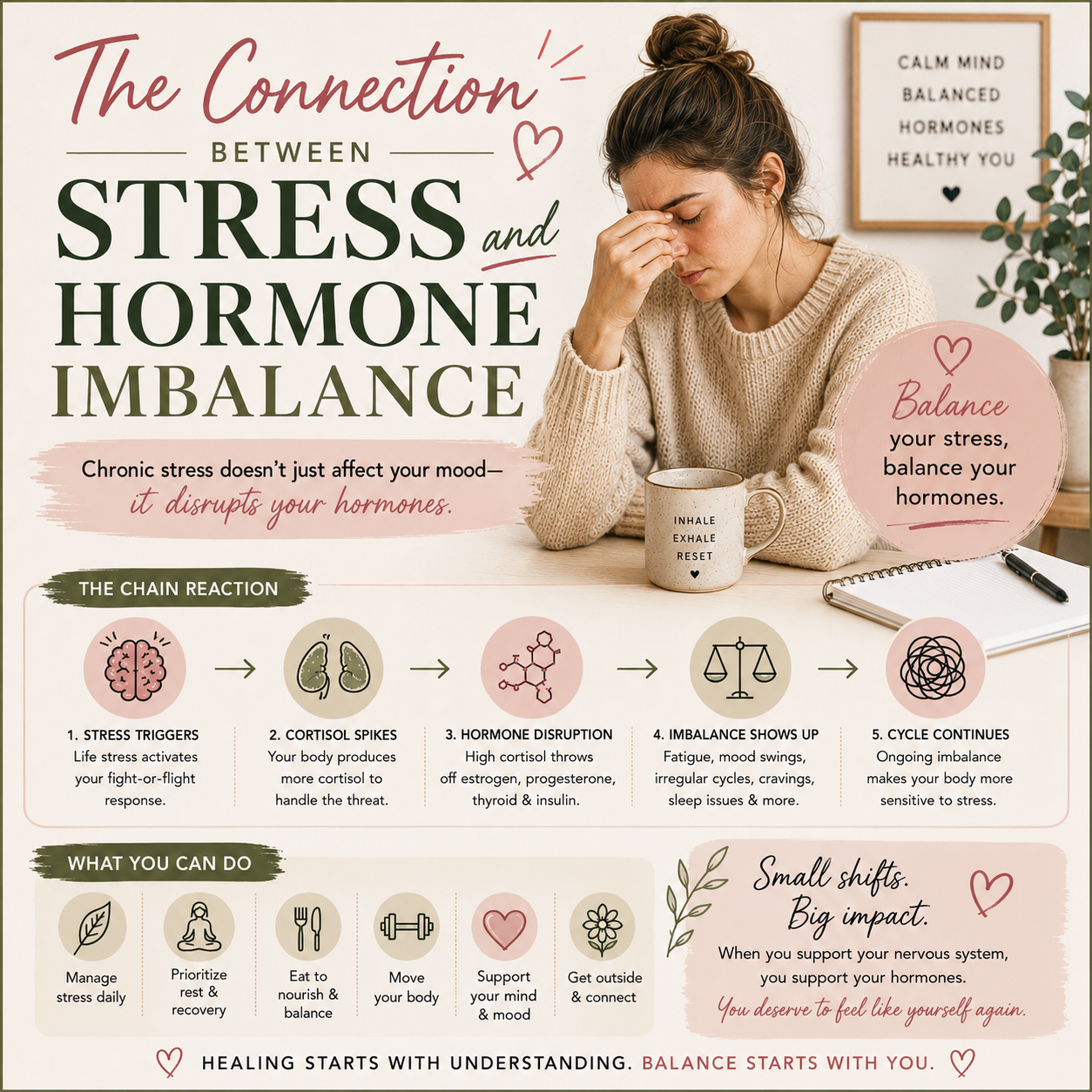


Stress affects more than your mood — it can also have a major impact on your hormones and overall well-being. When your body experiences ongoing stress, it produces higher levels of cortisol, often called the “stress hormone.” Over time, constantly elevated stress levels may disrupt your body’s natural hormonal balance.
This imbalance can contribute to symptoms like fatigue, mood swings, poor sleep, increased anxiety, low energy, weight changes, and difficulty concentrating. Many women over 30 notice these changes more as hormonal shifts naturally occur with age.
Chronic stress can also make it harder for your body to rest, recover, and regulate important functions properly. That’s why managing stress is an important part of supporting hormone health naturally.
Simple habits like improving sleep, reducing overwhelm, practicing mindfulness, moving your body regularly, and creating healthier daily routines can help support balance over time.
Your body is designed to protect you during stress, but it also needs moments of rest and recovery. Supporting your mental health is an important part of supporting your hormones too.
View comments
+ Leave a comment